
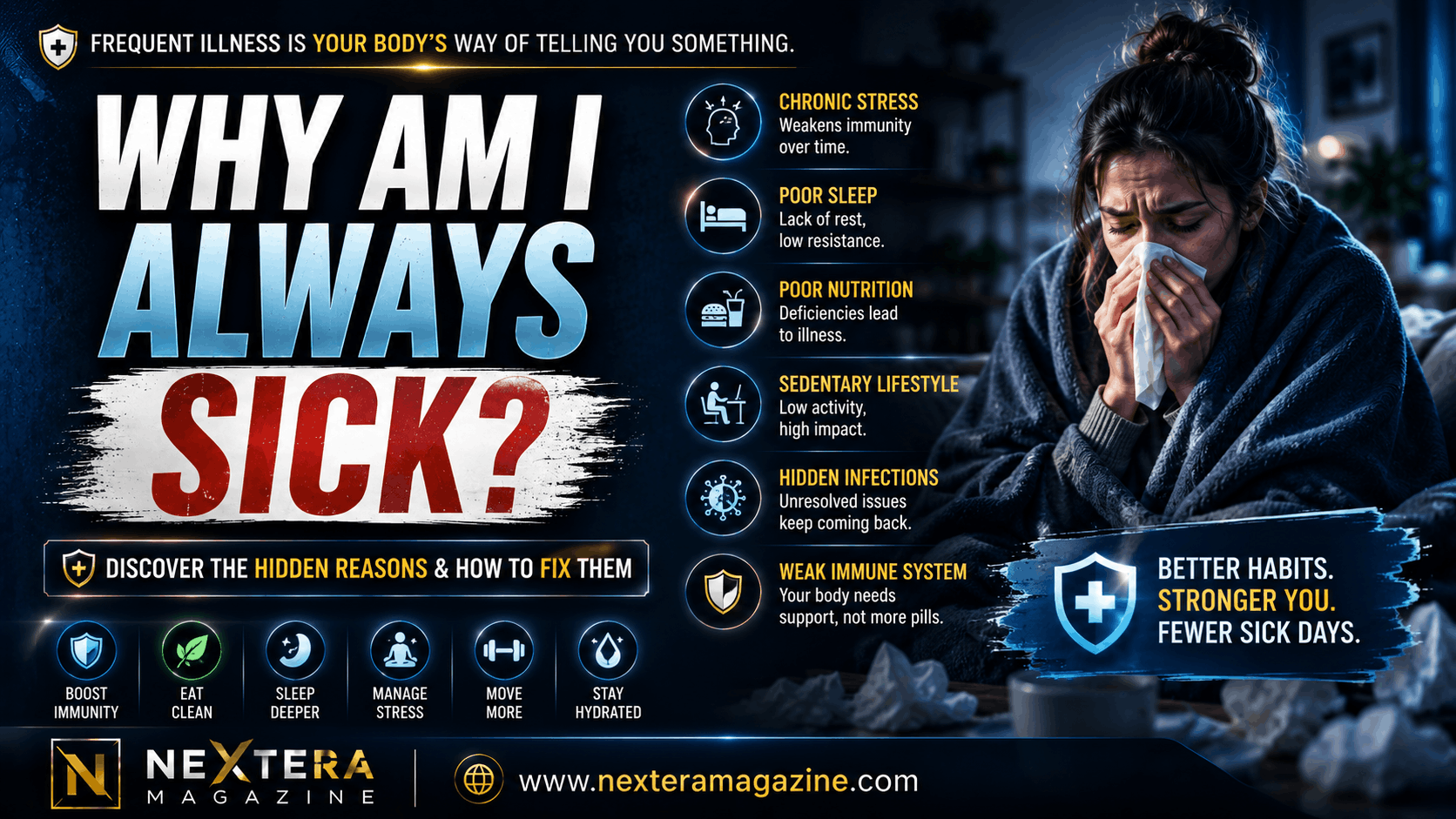
If you’ve caught yourself Googling “Why am I always sick?” at 2am with a sore throat—again—you’re in the right place. Getting sick once or twice a year is normal. But if you’re constantly fighting colds, infections, or just feeling run-down, something deeper is usually going on.
It’s not bad luck. And it’s probably not one single thing.
Most of the time, it’s a combination of lifestyle habits quietly undermining your immune system. The good news? A lot of these are fixable.
Why Am I Always Sick? The Most Common Reasons
Let’s start with the big ones. These are the factors that come up again and again — and they’re more connected than you’d think.
You’re Not Sleeping Enough
This one is underrated. Sleep is when your body does most of its immune repair work.
Research from the University of California, San Francisco, found that people who sleep fewer than six hours a night are four times more likely to catch a cold than those who sleep seven or more hours.
Four times. That’s not a small difference.
And it’s not just about quantity. Poor sleep quality—waking up a lot, sleeping lightly—can be just as damaging. Your immune system produces cytokines during sleep. These are proteins that fight infection and inflammation. Skip sleep, skip the repair.
So if you’re asking why I am always sick, this is the first place to look.
Chronic Stress Is Wrecking Your Immunity
Stress doesn’t just feel bad. It physically suppresses your immune response.
When you’re stressed, your body releases cortisol. Short bursts of cortisol are fine — even useful. But chronic stress keeps cortisol elevated for weeks or months at a time. That tells your immune system to stand down.
The result? You catch everything that goes around. And you take longer to recover.
I’ve noticed that the times I’m most run-down aren’t usually during the busiest stretches. It’s right after when the stress lifts and my body finally lets its guard down. That “holiday immune crash” is a real and well-documented phenomenon.
Your Diet Is Missing Key Nutrients
You don’t need to eat perfectly. But a few specific deficiencies will tank your immune function fast.
Vitamin D is a big one. A huge portion of the global population is deficient—especially people who work indoors or live in less sunny climates. Low vitamin D is strongly linked to increased susceptibility to infections.
Zinc is another. It plays a direct role in the development of immune cells. Low zinc means slower immune response.
Vitamin C gets all the attention. But it’s less of a magic fix and more of a baseline requirement. Your body can’t store it, so you need it consistently — not just when you’re already sick.
If you’re eating mostly processed food, skipping vegetables, or running on caffeine and convenience meals, your immune system is probably running on fumes.
Why Am I Always Sick? The Overlooked Triggers
Beyond the big three, there are some less obvious reasons that often get missed.
You’re Touching Your Face Too Much
This sounds simple. But it’s one of the most effective transmission routes for viruses and bacteria.
The average person touches their face around 23 times per hour, according to research published in the American Journal of Infection Control. Eyes, nose, and mouth are the entry points for most respiratory infections.
Frequent handwashing helps. But the real fix is awareness. Notice how often your hands go to your face during the day. It’s probably more than you think.
Your Environment Might Be the Problem
If you work in a school, hospital, childcare, or any other high-contact setting, you’re simply exposed to more pathogens. That’s not a personal immune failure — it’s math.
But environment matters beyond job type too.
Dry indoor air — especially in winter with the heat running — dries out your nasal passages. Those passages are your first line of defense. Dry, cracked membranes let viruses in more easily. A simple humidifier in your bedroom can genuinely help.
Also: shared surfaces. Keyboards, door handles, phones. These carry far more bacteria and viruses than most people realize.
You Might Have an Underlying Condition
Sometimes the answer to why I am always sick isn’t lifestyle—it’s medical.
A few conditions that commonly cause frequent illness include:
- Iron-deficiency anemia — reduces the oxygen your cells get, including immune cells
- Thyroid disorders — an underactive thyroid slows nearly every system, including immunity
- Autoimmune conditions—when the immune system is misdirected, it can leave you vulnerable to outside infections
- Diabetes — high blood sugar impairs white blood cell function
If you’ve cleaned up your sleep, diet, and stress levels and you’re still getting sick constantly, see a doctor. A basic blood panel can reveal a lot.
How Your Gut Health Affects How Often You Get Sick
This one surprises people. But it shouldn’t.
Around 70% of your immune system lives in your gut. The bacteria that live there—your microbiome—directly influence how well you respond to pathogens.
A disrupted microbiome means a weaker front line.
Common microbiome disruptors include:
- Antibiotics (necessary sometimes, but they wipe out good bacteria too)
- High sugar intake
- Alcohol
- Lack of dietary fiber
- Chronic stress (again)
Eating fermented foods—yogurt, kefir, kimchi, and sauerkraut—helps replenish beneficial bacteria. Fiber feeds them. And if you’ve had a round of antibiotics, a quality probiotic can speed up recovery of your gut flora.
This isn’t fringe wellness advice. It’s fairly well-established science at this point.
Why Am I Always Sick Even When I Take Vitamins?
A lot of people ask this one specifically. You’re doing the “right” things—taking supplements, trying to eat well—and still getting sick every month.
Here’s what’s often happening.
Supplements can’t compensate for poor foundations. If you’re sleeping five hours, running on stress, and eating mainly takeout, a daily multivitamin isn’t going to close that gap.
Also, not all supplements are created equal. Some are poorly absorbed. Some contain doses that are too low to have a meaningful effect. And some conditions prevent proper absorption entirely — like low stomach acid limiting B12 uptake, or gut issues affecting fat-soluble vitamins like D, A, E, and K.
Vitamins work best as support — not substitutes.
If you’re supplementing seriously, get your levels tested first. Taking more of something you’re not actually deficient in rarely helps. And in some cases, like with fat-soluble vitamins, excess can cause problems.
Practical Changes That Actually Make a Difference
Here’s what actually moves the needle — based on what the research consistently shows.
Prioritize sleep over everything else. Seriously. Seven to nine hours. Make the room dark and cool. Cut screens an hour before bed. This one change has a bigger impact than most people expect.
Move your body regularly. Moderate exercise—walking, cycling, and swimming—boosts immune function. But very intense exercise without adequate recovery can suppress it. You don’t need to train like an athlete. You just need to move consistently.
Drink more water. Dehydration thickens mucus in your airways, making it easier for pathogens to take hold. Most adults are mildly dehydrated most of the time.
Cut back on alcohol. Even moderate alcohol use impairs immune response. It disrupts sleep quality too — even if it helps you fall asleep faster.
Get outside in daylight. Natural light helps regulate your circadian rhythm. And if you’re getting some sun exposure, you’re also boosting vitamin D.
None of this is revolutionary. But the unsexy truth is that the basics, done consistently, work.
When to Actually See a Doctor
Most people who ask, “Why am I always sick?” don’t need a specialist. They need better sleep and less stress.
But there are signs that warrant a medical visit:
- You’re getting more than six to eight infections per year
- Infections are unusually severe or take a long time to resolve
- You’re getting unusual infections—things most healthy adults don’t get
- You have other unexplained symptoms: fatigue, weight changes, joint pain
These can point toward immune deficiency disorders or other underlying conditions. A doctor can run basic immune function tests and rule out the more serious causes.
Don’t ignore a pattern. One bad winter is normal. Three bad years in a row is data.
The Honest Summary
If you’ve been Googling “Why am I always sick for longer than you’d like to admit?”—you’re not broken. You’re probably just running a deficit somewhere.
Sleep. Stress. Diet. Gut health. Environment. These are the usual suspects. And they interact with each other in ways that compound quickly when they’re all off at once.
Start with sleep. It’s the highest-leverage fix and the one most people resist the most. Then look at stress. Then diet.
Give each change a few weeks before judging it. Your immune system doesn’t reset overnight. But it does respond — reliably — when you give it what it needs.
Read Also: Easiest Med Schools to Get Into: A Realistic Guide