
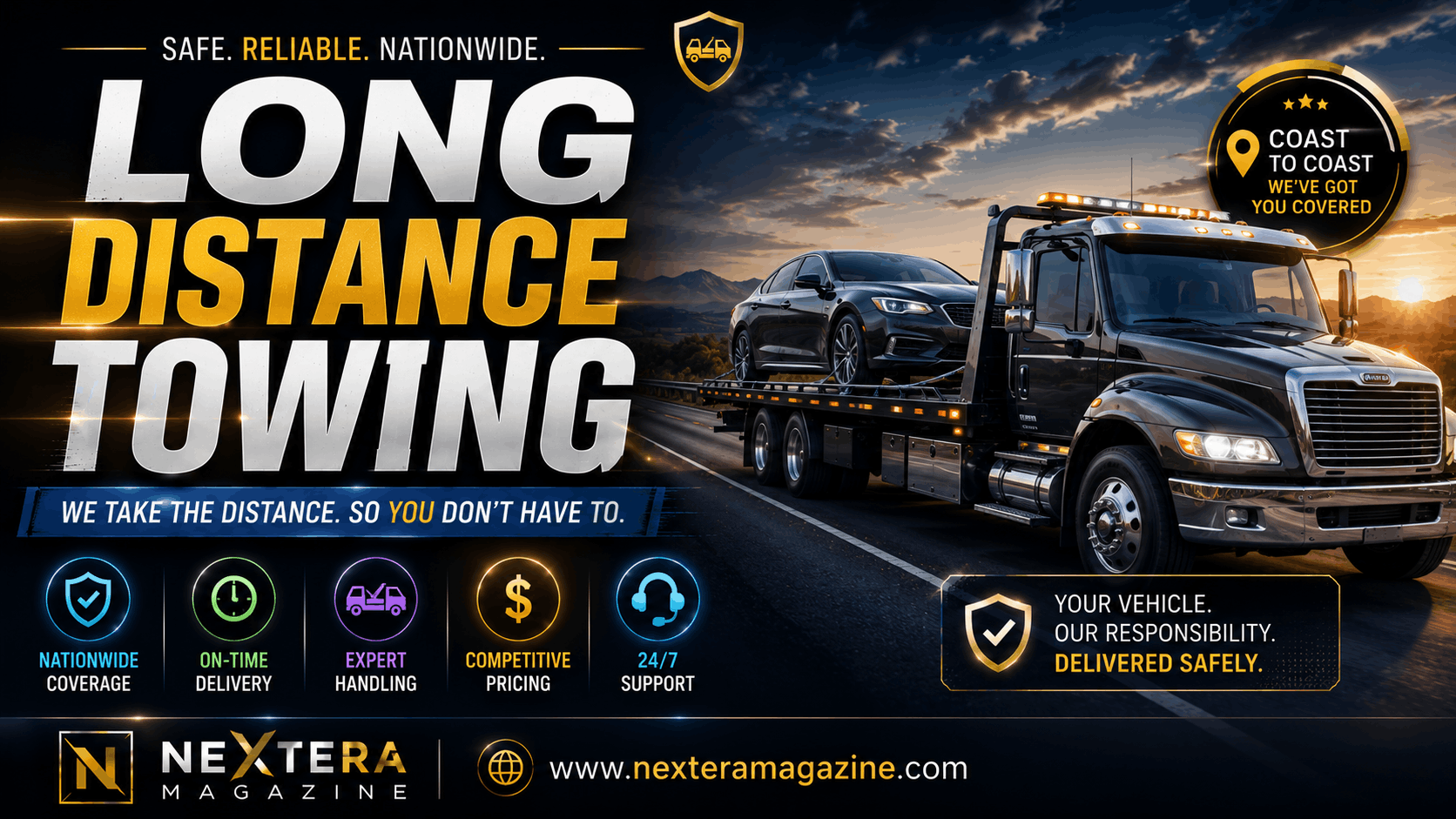
Moving a vehicle or trailer across hundreds of miles isn’t something most people do every day. But when you need long-distance towing, the stakes are high and the margin for error is slim. Get it wrong and you’re looking at breakdowns, fines, or serious damage to your vehicle. Get it right and the whole thing is almost boring — which is exactly what you want.
Whether you’re relocating, hauling a boat to a new marina, or moving a broken-down car across state lines, this guide covers the practical stuff that actually matters.
What Long-Distance Towing Actually Involves
At its core, long-distance towing means moving a vehicle, trailer, or heavy load over a significant distance—typically anything beyond 100 miles is considered long-haul territory. But it’s not just driving further. The logistics change completely.
You’re dealing with multiple states, different highway conditions, fuel planning, weight limits, and the physical stress on your towing vehicle over many hours. In my experience, people underestimate how much the extended distance amplifies every small problem. A slightly underinflated trailer tire that’s fine for a 20-mile trip can blow at highway speed on mile 300.
The two main approaches are hiring a professional towing company or doing it yourself with a truck and trailer. Both are valid. Your choice depends on distance, load type, budget, and how comfortable you are with towing.
Professional services handle everything — pickup, transport, delivery, and insurance. DIY gives you control and can cost less but requires the right equipment and knowledge.
Choosing the Right Equipment for Long-Distance Towing
If you’re doing it yourself, your equipment is everything. The wrong setup causes accidents, damages vehicles, and creates legal headaches.
Towing capacity is where most people go wrong first. Your truck or SUV has a rated towing capacity listed in the owner’s manual. Never exceed it. And don’t just look at the tow rating—check the Gross Combined Vehicle Weight Rating (GCVWR) too. The NHTSA provides towing safety guidelines that most drivers have never read.
Weight distribution matters just as much as total weight. An improperly loaded trailer will sway at speed—and swaying at 70 mph on a highway is terrifying. Aim for 60% of trailer weight in the front half of the load.
For the trailer itself, consider:
- Flatbed trailers — best for vehicles, equipment, or irregular loads
- Enclosed trailers — protect cargo from weather and theft
- Car dollies — cheaper but only work for front-wheel-drive vehicles
Brake controllers are required in most states when towing above a certain weight (usually 3,000 lbs). Check the specific laws for every state you’ll pass through. A resource like U-Haul’s towing guide breaks this down well for common setups.
How to Plan a Long-Distance Towing Route
Route planning for a long-distance towing trip is different from a regular road trip. You’re not just picking the fastest route.
Avoid steep mountain passes if you can. Extended downhill grades overheat trailer brakes. Sharp switchbacks are miserable with a long trailer. And some roads have weight restrictions that apply to vehicles with trailers — FHWA’s freight route maps are a solid resource for checking this before you go.
Rest stops matter more than people think. Towing is fatiguing. You’re constantly making micro-adjustments, and your reaction time on a heavy rig isn’t the same as in a passenger car. Plan for more frequent stops than you normally would — every 150 to 200 miles is a reasonable target.
Fuel planning is also different. Towing drops your fuel economy dramatically. A truck that gets 20 mpg empty might get 10 to 12 mpg towing a loaded trailer. Do the math before you go. Running low on fuel with a heavy trailer is not a situation you want to be in.
And check the weather. Wind is your enemy when towing. Crosswinds cause sway, especially with tall enclosed trailers or vehicles on flatbeds. If the forecast shows sustained winds over 30 mph, seriously consider delaying.
Long-Distance Towing: When to Hire a Professional
There are situations where DIY towing just doesn’t make sense, and hiring a professional is the smarter call.
If you’re moving an inoperable vehicle, a specialized car transport service is almost always the right move. Flatbed carriers and enclosed auto transport companies do this every day. They’re insured and experienced, and their equipment is purpose-built. A service like Montway Auto Transport is one of the more well-known options for vehicle-specific long hauls.
Hire a professional when:
- The vehicle can’t roll or steer
- You don’t have access to appropriate towing equipment
- The distance is over 500 miles and you’re not comfortable with extended towing
- The cargo has high monetary or sentimental value
- You need it done on a specific timeline with delivery guarantees
I’ve noticed that people often call a professional after something goes wrong—not before. A breakdown halfway across the country, an improperly secured load that shifts, or a sway incident on the interstate. The cost of a pro upfront is almost always less than the cost of the problems that come from an unprepared DIY attempt.
Legal Requirements You Can’t Ignore
Long-distance towing crosses state lines, and the rules vary. This is one area where ignorance really isn’t an excuse.
Safety chains are required in all 50 states. They need to cross under the hitch in an X pattern, with enough slack to allow turning but not enough to drag.
Lighting requirements are consistent federally but worth double-checking. Your trailer needs working brake lights, turn signals, and running lights. Test them before every trip.
Oversize and overweight permits are required if your total load exceeds certain dimensions or weights. For a regular vehicle on a trailer, you’re unlikely to hit these thresholds. But if you’re moving heavy equipment or unusually wide loads, check state-specific requirements. The FMCSA’s rules for commercial haulers are the federal baseline.
Insurance is another thing to sort out before you go. Most standard auto policies don’t cover cargo you’re towing. If you’re hauling something valuable, get it covered explicitly.
Common Mistakes in Long-Distance Towing
These come up again and again, and most of them are avoidable.
Skipping the pre-trip inspection. Check every light, every connection, and every tire—on both the tow vehicle and the trailer. Take 20 minutes and save yourself a roadside nightmare.
Not practicing before a long trip. If you’ve never towed before, a cross-country haul is not the place to learn. Practice backing up, turning, and braking in an empty parking lot first.
Overconfidence with weight. People regularly overload trailers. Use a scale if you’re not sure. Most truck stops have commercial scales you can use for a few dollars.
Forgetting about ground clearance. Driveways, gas station entrances, and steep parking lot ramps can scrape or damage a lowered vehicle on a trailer. Scout your pickup and drop-off points beforehand if you can.
Ignoring trailer sway. If your trailer starts to sway, don’t hit the brakes hard. Ease off the accelerator and apply the trailer brakes manually if you have a brake controller. Overcorrecting or braking too hard makes the sway worse.
Long Distance Towing: What Long-Distance Towing Costs
Costs vary widely depending on what you’re moving, how far, and who’s doing it.
For professional auto transport, a typical coast-to-coast vehicle move in the US runs anywhere from $900 to $1,800 depending on vehicle size, season, and type of transport (open vs. enclosed). Enclosed transport costs more but protects the vehicle from road debris and weather.
DIY towing is cheaper on paper, but factor in fuel, trailer rental, potential overnight stops, and your own time. A trailer rental from a company like U-Haul or Penske runs $100 to $500+ per day depending on size. Fuel for a loaded truck on a 1,000-mile trip can easily run $200 to $400.
Neither option is always “cheaper.” It depends on your specific situation.
Final Thoughts
Long-distance towing isn’t complicated, but it does demand preparation. The people who have problems are almost always the ones who skipped a step—ignored a weight limit, didn’t check the weather, or forgot to inspect the trailer lights. The ones who have smooth trips planned carefully and took the distance seriously from the start.
So whether you’re hiring a pro or handling it yourself, do the homework before you hit the highway. Your future self—sitting in a parking lot waiting for a tow truck at mile 400 — will thank you for it.
Read Also: Why Am I Always Sick? Real Reasons and Real Fixes