If your cycles feel off, your PMS has gotten worse, or you’re staring down a luteal phase that’s too short to sustain a pregnancy, progesterone is probably the hormone your doctor has already mentioned. And if you’d rather try natural ways to get progesterone up before reaching for a prescription, you’re not alone. Many women land here first.
Here’s the part that surprises people: your body doesn’t make progesterone on command the way it makes, say, cortisol in response to stress. Progesterone comes almost entirely from ovulation. No ovulation, no real progesterone. So most of what actually works falls into one category, supporting your body’s ability to ovulate well and consistently, rather than “boosting” progesterone directly the way you’d boost vitamin D with a supplement.
That distinction changes how you should think about this whole topic, so let’s get into what actually helps and what’s mostly noise.
Why Progesterone Drops in the First Place
Low progesterone rarely occurs without a reason. It’s usually downstream of something else going on, like chronic stress, poor sleep, undereating, over-exercising, insulin resistance, or perimenopause, where ovulation naturally becomes less predictable.
In my experience, the women who see the fastest improvement are the ones who identify which of these is actually driving their situation instead of throwing supplements at the problem. A 24-year-old with PCOS and a 43-year-old in perimenopause both have “low progesterone,” but the fix looks entirely different for each of them.
If your periods have stopped altogether or you suspect something more serious like hyperprolactinemia, that’s a conversation for your doctor, not a DIY project.
Managing Stress Actually Matters Here
This one gets repeated so often it risks sounding like filler advice, but the biochemistry behind it is real. Progesterone and cortisol share a production pathway; both are made from the same precursor, pregnenolone. Under chronic stress, your body prioritizes cortisol production, effectively diverting resources away from progesterone. Researchers sometimes call this phenomenon the “pregnenolone steal,” though the concept is debated in its exact mechanics.
What this scenario looks like in practice: short, frequent stress (a rough commute, a deadline) probably isn’t going to tank your progesterone. Sustained, unrelenting stress over months, the kind tied to overtraining, chronic sleep debt, or a genuinely challenging season of life, is a different story. If you’re dealing with the second kind, addressing it is likely to do more for your hormones than any supplement on this list.
Simple, unglamorous tools tend to help most: consistent sleep and wake times, reducing caffeine after noon, and building in actual recovery days if you exercise hard. Yoga and breathwork show up in a lot of the research on cortisol reduction, and there’s no harm in trying them even if the effect size on progesterone specifically is difficult to pin down.
Eating in a Way That Supports Ovulation
Diet won’t manufacture progesterone directly, but it provides the raw materials your body needs to ovulate and to convert cholesterol into hormones in the first place. A few things worth prioritizing:
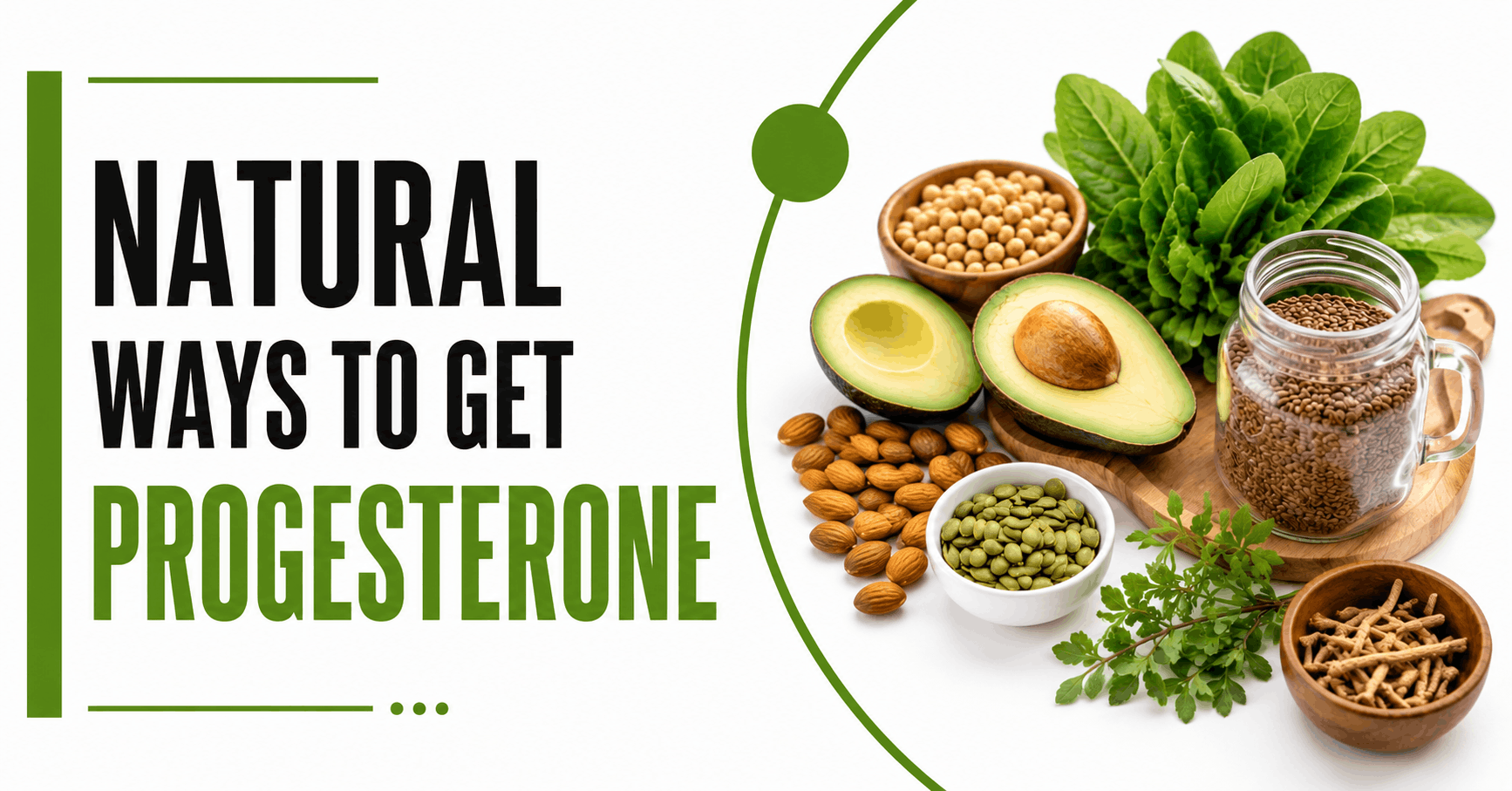
Healthy fats matter more here than in a lot of other health contexts, since progesterone is synthesized from cholesterol. Avocados, olive oil, nuts, and fatty fish aren’t just “heart healthy” buzzwords; they’re structural inputs.
B6, magnesium, and zinc come up constantly in the research on luteal phase support. B6 in particular has some decent trial evidence behind it for improving luteal phase length. Foods like chickpeas, salmon, potatoes, and pumpkin seeds cover a lot of this ground without needing a supplement aisle.
Vitamin C deserves a specific mention. One often-cited trial found that women taking 750mg of vitamin C daily saw meaningful improvements in luteal progesterone, particularly those dealing with luteal phase defects. Citrus, bell peppers, and broccoli get you there through food alone.
Undereating is worth flagging too, since it’s easy to miss. Chronic calorie restriction or very low carb intake can suppress ovulation entirely in some women, which obviously tanks progesterone along with it. If you’re restricting hard and your cycle has gotten irregular, that’s a strong signal to loosen up before adding anything else to the mix.
Vitex (Chasteberry): The Herb Everyone Asks About
No article on natural ways to get progesterone would be complete without addressing vitex, since it’s the herbal remedy that comes up more than any other. Also called chasteberry or Vitex agnus-castus, it has a long history in traditional herbal medicine and a reasonable amount of modern research behind it, mostly for PMS symptoms.
Here’s where I’ll push back on some of the more enthusiastic marketing around it: vitex doesn’t appear to raise progesterone by itself the way people often assume. What the evidence more consistently supports is that vitex lowers elevated prolactin, which in turn allows luteinizing hormone to rise and supports ovulation. Once ovulation happens normally, progesterone follows as a natural consequence. So it’s less “vitex boosts progesterone” and more “vitex may help remove a specific obstacle to ovulation” for some women, particularly those with mildly elevated prolactin.
That’s a meaningful distinction. If your low progesterone has nothing to do with prolactin, vitex may do very little for you. It also typically takes around three months to show any effect, so the treatment isn’t a quick fix, and it’s not something to combine casually with fertility medications or hormonal birth control without talking to a provider first. The National Center for Complementary and Integrative Health has a solid, non-commercial overview of what the research does and doesn’t support if you want to dig deeper before trying it.
Sleep Is Doing More Work Than People Give It Credit For
Poor sleep disrupts the same hypothalamic-pituitary-ovarian signaling that governs your whole cycle. Women who regularly sleep fewer than six hours a night tend to show more cycle irregularity, which usually means less consistent ovulation.
What tends to surprise people is how quickly sleep debt compounds. It’s not just about total hours, either. Going to bed at wildly different times each night seems to matter almost as much as the raw hour count, since it disrupts the circadian rhythms that help regulate reproductive hormones in the first place. Building more consistent daily routines tends to help here even before you change your diet or take supplements.
Exercise: Helpful Until It Isn’t
Moderate, regular movement supports insulin sensitivity and stress regulation, both of which indirectly support healthy ovulation. But there’s a ceiling here that a lot of fitness-focused advice glosses over.
Excessive endurance training, especially combined with inadequate calorie intake, is one of the more well-documented causes of anovulation in otherwise healthy women. This phenomenon shows up a lot in competitive runners and cyclists, where amenorrhea becomes almost normalized within the sport, which it absolutely shouldn’t be. If your training volume has crept up and your cycle has gotten shorter, lighter, or disappeared, that’s worth addressing before anything else on this list.
Seed Cycling: Popular, Under-Studied
Seed cycling involves eating specific seeds (usually flax and pumpkin in the first half of the cycle, sesame and sunflower in the second) timed to your cycle phases, with the idea being that they support estrogen and then progesterone, respectively. It’s genuinely popular in wellness circles right now.
I’ll be direct about this one: there isn’t strong clinical evidence that seed cycling meaningfully changes hormone levels. The seeds themselves contain lignans and healthy fats that are perfectly good for you, and there’s no real downside to trying it. Just don’t expect it to substitute for addressing an actual underlying issue like anovulation or a diagnosed luteal phase defect.
Common Mistakes to Avoid
A few patterns show up again and again in this space. Combining multiple hormone-modulating herbs at once (vitex plus black cohosh plus maca, for example) without professional guidance, since interactions aren’t always well studied. Expecting results within days rather than the months these interventions typically require is another common mistake. Ignoring undereating or overtraining as the root cause while adding supplements on top of an unresolved calorie deficit is another common mistake. And skipping bloodwork entirely, since “low progesterone” is sometimes assumed rather than confirmed.
Getting an actual progesterone test, timed correctly around day 21 of a typical 28-day cycle (or roughly seven days after ovulation, whenever that happens for you), tells you far more than symptoms alone. The Mayo Clinic’s overview of menstrual cycle health is a decent starting point if you want to understand normal ranges before your next appointment.
When Natural Approaches Aren’t Enough
If you’ve addressed sleep, stress, diet, and exercise and your cycles are still irregular, or if you’re actively trying to conceive and running out of patience, it’s worth talking to your doctor about testing and, if needed, bioidentical progesterone support. Natural approaches are genuinely useful for supporting the systems behind hormone production, but they aren’t a substitute for medical evaluation when something structural, like PCOS or a thyroid issue, is driving the imbalance.
FAQs
Can I raise progesterone with supplements alone, without addressing lifestyle factors? Not reliably. Supplements support the systems that produce progesterone, but if stress, sleep, or undereating are driving the problem, these alone tend to underperform.
How long before I notice a difference? Most of these approaches, Vitex included, take two to three full cycles to show measurable change. Anything that promises results in days is overselling it.
Is it safe to try vitex while on hormonal birth control? This question is one to run by your doctor since Vitex works through pituitary signaling and birth control suppresses that same axis. The two may simply cancel each other out or interact in ways that aren’t fully studied.
Does seed cycling really work? The seeds are nutritious, but the evidence for a measurable hormonal effect is thin. Treat it as a low-risk addition, not a primary strategy.