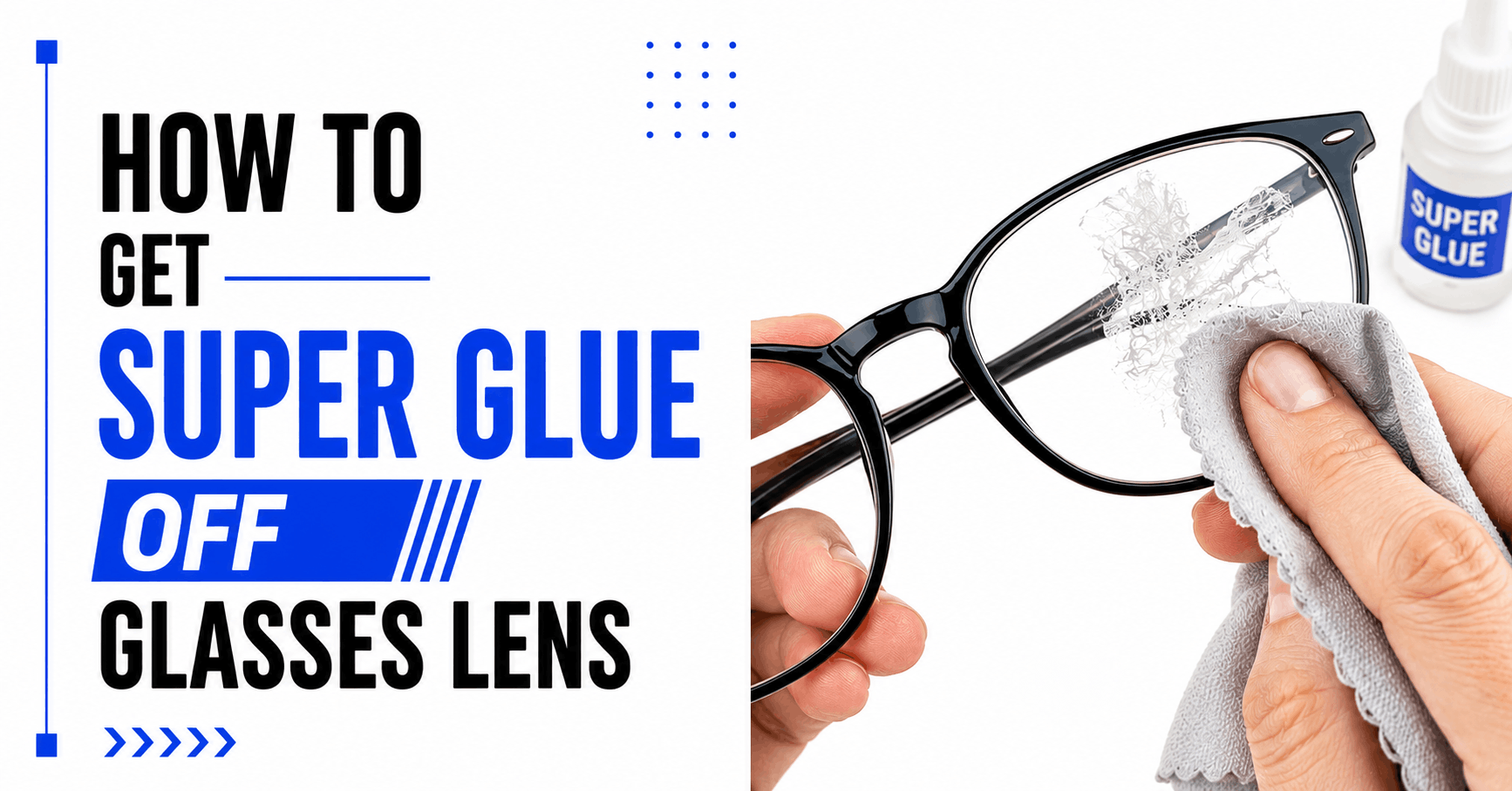
You reached for the glue to fix something small, a loose screw on the frame maybe, and now there’s a cloudy smear sitting right in your line of sight. It happens more often than people admit, and the panic that follows usually makes things worse, because the instinct is to scrape at it with a fingernail or a knife edge. Don’t do that yet.
Getting super glue off a glasses lens is completely doable at home in most cases, as long as you’re patient and use the right approach for your lens material. Plastic lenses (which is what most modern glasses use) need gentler handling than glass ones, so knowing which you have matters before you start.
Figure Out What Kind of Lens You’re Dealing With
Most prescription and non-prescription glasses sold in the last couple of decades use polycarbonate or CR-39 plastic lenses. Glass lenses are much rarer now, mostly found in older glasses or specialty eyewear. You can usually tell by weight. Plastic lenses feel noticeably lighter than glass. If you’re not sure, treat the lens as plastic and use the gentlest method first, since plastic scratches and clouds far more easily under harsh chemicals.
This distinction matters because acetone, one of the most common “fixes” people reach for, will damage plastic lenses and many anti-reflective or anti-scratch coatings. It’s fine on glass, but risky everywhere else. Keep that in mind as you read through the options below.
Start With Warm Soapy Water
This is the least aggressive method, and it’s worth trying first even if you’re skeptical it’ll do anything.
- Fill a bowl with warm (not hot) water and a few drops of dish soap.
- Submerge the lens area for about 10 to 15 minutes. If it’s a full pair of glasses, you can soak just the lenses by tilting them in a shallow dish.
- After soaking, gently rub the glue spot with your thumb or a soft microfiber cloth.
- Rinse and check. If the glue has softened at all, repeat the soak for another 10 minutes.
In my experience, this works better on fresh glue than on glue that’s had days to cure. Super glue (cyanoacrylate) bonds fast, but it keeps hardening for about 24 to 48 hours, so the sooner you catch it, the easier this step goes.
Try a Cotton Swab With a Small Amount of Petroleum Jelly
This one surprises people, but petroleum jelly (like Vaseline) can help loosen cured cyanoacrylate without touching the coating on your lens.
Dab a small amount onto the glue spot and let it sit for about 10 minutes. Then use a cotton swab to gently work at the edges of the glue in small circular motions. The idea isn’t to scrub it off in one go. It’s to loosen the bond gradually so it lifts away in small flakes rather than one stubborn chunk.
Wipe with a soft cloth between attempts to see your progress. This method takes longer than acetone-based approaches, but it’s a lot safer for coated lenses.
Use Isopropyl Alcohol, Diluted and Applied Carefully
Isopropyl alcohol is milder than acetone and works reasonably well on cured super glue, though it won’t dissolve it as fast.
- Dip a cotton swab in rubbing alcohol (70% concentration is common and works fine).
- Dab, don’t rub, directly onto the glue spot.
- Let it sit for 2 to 3 minutes to start breaking down the bond.
- Gently rub with a microfiber cloth in small circles.
- Repeat as needed, checking the lens surface each time for any dulling or haze.
One thing worth flagging: some anti-reflective coatings are sensitive even to alcohol, so if you notice the coating starting to look filmy or streaky, stop immediately and switch to the soap-and-water method instead. It’s slower, but it won’t strip the coating.
Acetone: Only for Uncoated Glass Lenses
If you’ve confirmed your lenses are glass and have no special coating (checking with the optician who sold them is the safest way to confirm this), acetone nail polish remover can dissolve super glue fairly quickly. Apply a small amount to a cotton swab, dab the glue, wait a minute, then wipe.
But if there’s any doubt about the lens material or coating, skip this step entirely. Acetone on plastic lenses tends to cause a permanent cloudy patch that no amount of cleaning will fix afterward, and it’s one of the most common mistakes people make trying to rush the process.
What Not to Do
A few habits make this problem worse instead of better:
Scraping with a fingernail, razor blade, or knife seems like the fastest fix, but it almost always leaves fine scratches, even on glass. Those scratches catch light and become permanent distractions every time you wear the glasses.
Using acetone on plastic or coated lenses is the other big one, covered above, but it bears repeating because it’s the single most common way people ruin a pair of glasses trying to remove glue.
Rubbing dry glue with a paper towel or tissue can also introduce micro-scratches, since paper fibers are more abrasive than they look under normal conditions. Stick to microfiber cloths designed for optical surfaces.
If the Glue Won’t Budge
Sometimes, especially with glue that’s cured for several days or longer, none of the home methods fully clear it. At that point, it’s worth taking the glasses to an optician. Many optical shops have specialized cleaning solutions and ultrasonic cleaners that can handle stubborn residue without risking the lens coating, and the service is often inexpensive or even free if you bought the glasses there.
It’s also worth checking whether your lenses are still under a warranty or protection plan through the retailer, since some plans cover this kind of damage or offer a discounted replacement.
Preventing This Next Time
If you’re gluing something near your glasses again, whether it’s a temple screw, a nose pad, or a cracked frame piece, take the lenses out first if the frame design allows it. Many plastic and some metal frames let you pop lenses out with gentle pressure, glue the frame separately, and pop the lenses back in once everything’s dry. If your frame doesn’t allow that, cover the lens completely with painter’s tape before you start, since it’s easy to remove afterward and leaves no residue.
For actual eyewear repairs like loose screws or cracked temples, a proper eyewear repair kit with the right size screws is usually a better bet than super glue anyway, since super glue bonds are rigid and tend to crack again under the flexing that happens every time you put glasses on and take them off.
Frequently Asked Questions
Will super glue permanently damage my glasses’ lens? Not usually, as long as you avoid scraping it off or using acetone on coated or plastic lenses. Most glue can be safely removed with soap, warm water, and patience.
How long does super glue take to fully cure on a lens? Cyanoacrylate glue sets within seconds but continues curing for around 24 to 48 hours, according to Gorilla Glue’s own product guidance, which is one reason acting quickly makes removal easier.
Can I use acetone on my glasses if I don’t know what type of lens I have? It’s safer to assume you have plastic and coated lenses unless you’ve confirmed otherwise with an optician or the receipt from your purchase, since guessing wrong with acetone can permanently cloud the lens.
Is it safe to use a glasses cleaning spray to remove super glue? Standard lens cleaning sprays aren’t formulated to dissolve cured adhesive, so they won’t do much on their own, though they’re fine to use as a final polish once the glue is gone.
What if the glue got onto an anti-glare or blue light coating specifically? These coatings are more delicate than the base lens material, so start with the soap and water method and petroleum jelly approach before trying anything alcohol-based, and stop immediately if you see any haze developing.
Read Also: Bioma Reviews: Does This Gut Health Supplement Actually Work?