
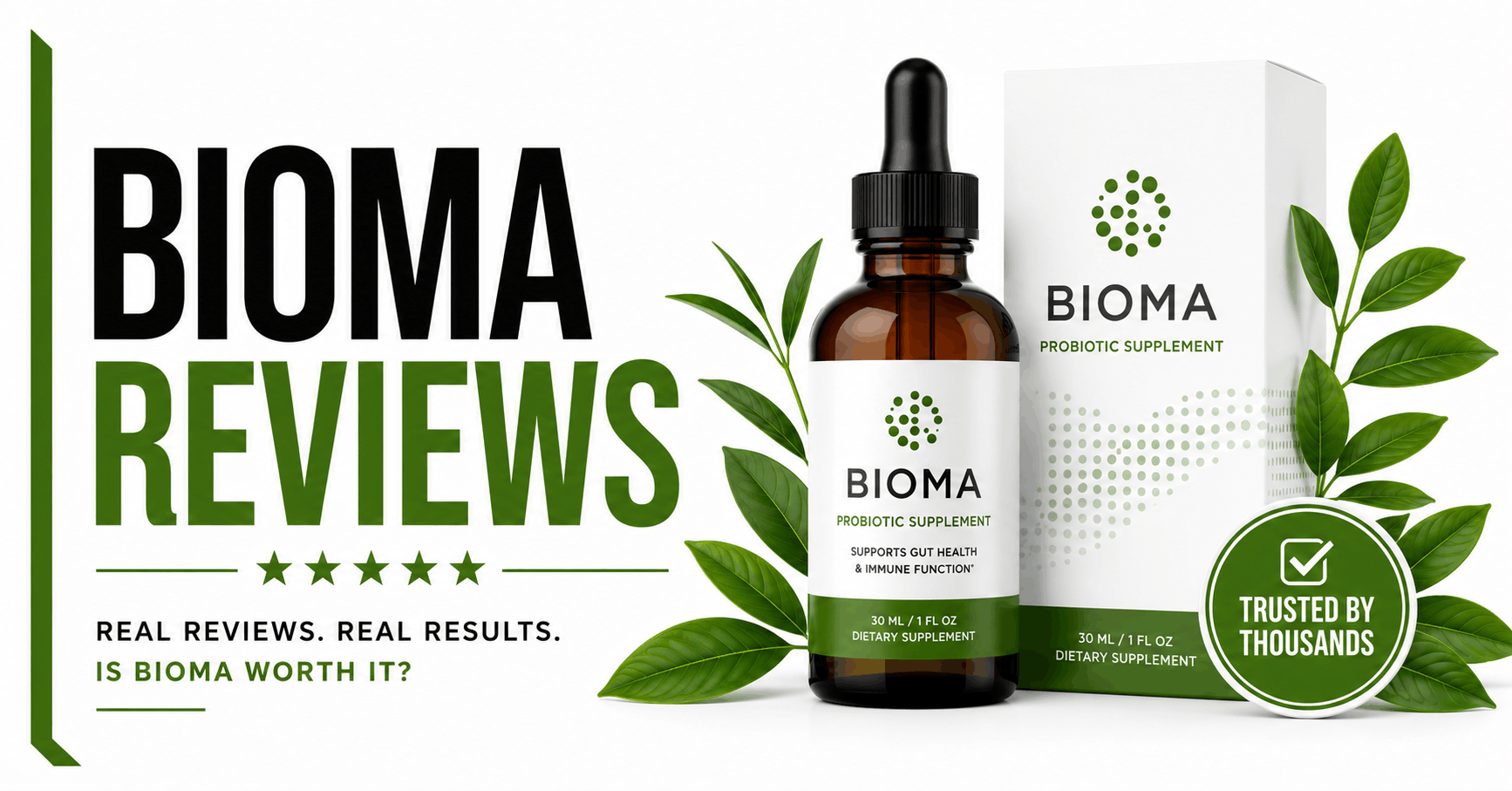
If you’ve spent any time scrolling through wellness content lately, you’ve probably run into bioma reviews promising flatter stomachs, better digestion, and a “reset” gut microbiome. The pitch is everywhere: probiotics, prebiotics, and postbiotics in one capsule, marketed hard toward people dealing with bloating, irregularity, and stubborn weight.
I dug into what Bioma actually contains, how it’s sold, and what’s realistic to expect. Because in this particular corner of the supplement world, the marketing tends to run well ahead of the science, and that’s worth knowing before you hand over your card number.
What Bioma Actually Is
Bioma is a synbiotic supplement, meaning it combines three things in one capsule: probiotic bacterial strains (mainly Bifidobacterium lactis, Bifidobacterium longum, and Bifidobacterium breve), a prebiotic fiber called xylooligosaccharides (XOS), and tributyrin, a postbiotic compound the body converts into butyrate. Butyrate is a short-chain fatty acid that’s genuinely important for gut lining health, and there’s decent research behind it as a concept, even if the supplement itself hasn’t been independently tested the way a pharmaceutical would be.
The capsules use a delayed-release design meant to survive stomach acid so the ingredients reach the intestines intact. That’s a reasonable engineering goal for a probiotic, since a lot of cheap probiotics die before they ever get where they’re supposed to go. Whether Bioma’s specific delivery system performs as advertised isn’t something I can verify independently, since the company hasn’t published third-party lab results for potency or survivability that I could find.
Who Makes It, and Where You Actually Buy It
This is where things get a little messy. The registered company behind the brand is Gut Health, UAB, based in Vilnius, Lithuania, and the product is sold as a dietary supplement rather than a regulated drug. That matters because in the US, the FDA does not review dietary supplements for safety or effectiveness before they hit the market. Companies are responsible for their own claims, and enforcement is mostly reactive.
What tends to surprise people is how many near-identical “official” Bioma sites exist, each with different pricing, different urgency banners (“stock is limited,” “60% off today only”), and slightly different domain names. That’s a common pattern in the affiliate-heavy supplement space, and it’s not unique to Bioma, but it does make it harder to know which storefront you’re actually ordering from. If you decide to buy, stick to a single recognizable domain and skip any site that layers on countdown timers or “today only” pressure. That kind of urgency is a sales tactic, not a reflection of actual inventory.
Pricing
Prices vary noticeably depending on which storefront you land on, which is part of why comparison shopping here is genuinely useful. As of mid-2026, one-time bottle prices have ranged from roughly $46 to $66, with subscription pricing bringing the per-bottle cost down to somewhere between $26 and $48 depending on how many bottles you commit to. Multi-bottle bundles (three or six at a time) consistently offer the lowest per-unit price, which is standard for supplement brands that want to lock in repeat customers.
One thing worth flagging: because pricing fluctuates by storefront and promotion, treat any number you see, including the ones above, as a snapshot rather than a guarantee. Check the current listing before you buy.
Does It Work? What the Reviews Actually Say
Here’s where I’ll be direct instead of hedging every sentence: the pattern across independent reviews and user reports is modest, not dramatic. People who stick with it for several weeks commonly report less bloating, more regular digestion, and fewer cravings. That’s plausible and lines up with what’s known about fiber and probiotic supplementation generally. What it isn’t is a weight loss drug. Any effect on weight is indirect at best, likely tied to appetite regulation and reduced bloating rather than any direct fat-burning mechanism, and the marketing that leans hard into “weight loss transformation” language is overselling what a gut supplement can realistically do.
In my experience, tools and supplements in this bloating-and-digestion category tend to help a noticeable subset of users meaningfully, do very little for another chunk of users, and rarely cause real harm either way. Bioma seems to fit that same curve. A few user complaints mention no noticeable change at all, which tracks with how individual gut microbiomes vary so much from person to person.
Ingredients Breakdown
The core formula includes:
- Bifidobacterium strains (lactis, longum, breve): probiotic bacteria studied for supporting digestion and gut barrier function.
- Xylooligosaccharides (XOS): a prebiotic fiber that feeds beneficial bacteria already in your gut.
- Tributyrin: converts to butyrate in the gut, which supports the intestinal lining.
- Other ingredients: microcrystalline cellulose, a delayed-release capsule shell, magnesium stearate, and silicon dioxide, all fairly standard fillers and capsule components.
The formula is marketed as vegan, gluten-free, non-GMO, and stimulant-free, which checks out based on the ingredient list. There’s no caffeine or synthetic appetite suppressant hiding in there.
Side Effects and Safety
Reported side effects are mild and mostly the kind you’d expect from introducing new bacteria and fiber into your gut: temporary gas, bloating, or changes in bowel habits during the first week or two as your system adjusts. That’s typical of probiotic supplementation generally, not a Bioma-specific issue. The National Center for Complementary and Integrative Health notes that most healthy adults tolerate probiotics reasonably well, though people with compromised immune systems or serious underlying conditions should talk to a doctor before starting any probiotic, and that advice applies here too.
This isn’t medical advice, and Bioma isn’t a treatment for any diagnosed digestive condition. If you have IBS, IBD, or another diagnosed GI condition, loop in your doctor before adding any supplement to your routine.
Pros and Cons
Pros:
- Combines all three synbiotic components (pro-, pre-, and postbiotic) rather than just probiotics alone
- Vegan, gluten-free, stimulant-free formula
- Delayed-release capsule designed to survive stomach acid
- Refund/guarantee policy offered through the official site
- Reasonable per-bottle pricing on multi-bottle subscriptions
Cons:
- No independently published third-party testing that I could verify
- Confusing web of near-duplicate “official” storefronts with inconsistent pricing
- Marketing frequently overstates weight loss potential
- Not sold in stores, so you’re limited to direct-to-consumer purchasing
- Results take weeks, and a meaningful portion of users report no noticeable change
Alternatives Worth Comparing
If you want to shop around before committing to a subscription, a few categories are worth knowing:
Single-strain probiotics from established brands tend to have more published clinical research behind specific strains, even if they skip the prebiotic and postbiotic components Bioma bundles together.
Fiber-forward prebiotic supplements on their own are cheaper and can produce similar bloating relief for people whose main issue is diet-related rather than a bacterial imbalance.
Whole-food approaches (fermented foods, increased fiber intake, reduced processed food) cost less than any supplement and address the same underlying gut health goals, just with more effort required and less convenience.
The Wikipedia entry on probiotics is a decent starting point if you want a broader look at the category before narrowing in on any single brand.
Who Should Try Bioma, and Who Should Skip It
Bioma is a reasonable pick for adults dealing with everyday bloating, mild irregularity, or general “my gut feels off” symptoms who want a vegan, stimulant-free option and are willing to commit to at least six to eight weeks before judging results. It’s a poor fit for anyone expecting fast, dramatic weight loss, anyone with a diagnosed GI condition who hasn’t cleared it with a doctor, or anyone unwilling to navigate the somewhat cluttered landscape of near-duplicate storefronts to find a legitimate order page.
FAQs
How long before Bioma works? Most reported improvements in bloating and digestion show up within two to three weeks. Any metabolic or weight-related effects, if they happen at all, typically take six to eight weeks of consistent use.
Is Bioma the same as a regular probiotic? No. Regular probiotics contain live bacteria only. Bioma adds a prebiotic fiber and a postbiotic compound alongside the bacteria, which is why it’s marketed as a synbiotic rather than a plain probiotic.
Can Bioma replace diet and exercise for weight loss? No. Nothing in the formula acts as a direct weight loss mechanism. Any appetite or bloating benefit works alongside diet and lifestyle changes, not instead of them.
Where should I buy it? Pick one recognizable storefront and stick with it rather than jumping between the various similarly named sites, and be skeptical of any page pushing artificial urgency around stock or pricing.
The Verdict
Bioma is a legitimately formulated synbiotic, not a scam in the sense of containing nothing useful, but the marketing around it (especially the weight loss angle) oversells what a gut health supplement can realistically deliver. If you’re mainly after help with bloating and digestive regularity and you’re comfortable treating it as a slow-burn addition to your routine rather than a fix, it’s worth a trial. If you’re hoping for a shortcut around diet and exercise, save your money.