
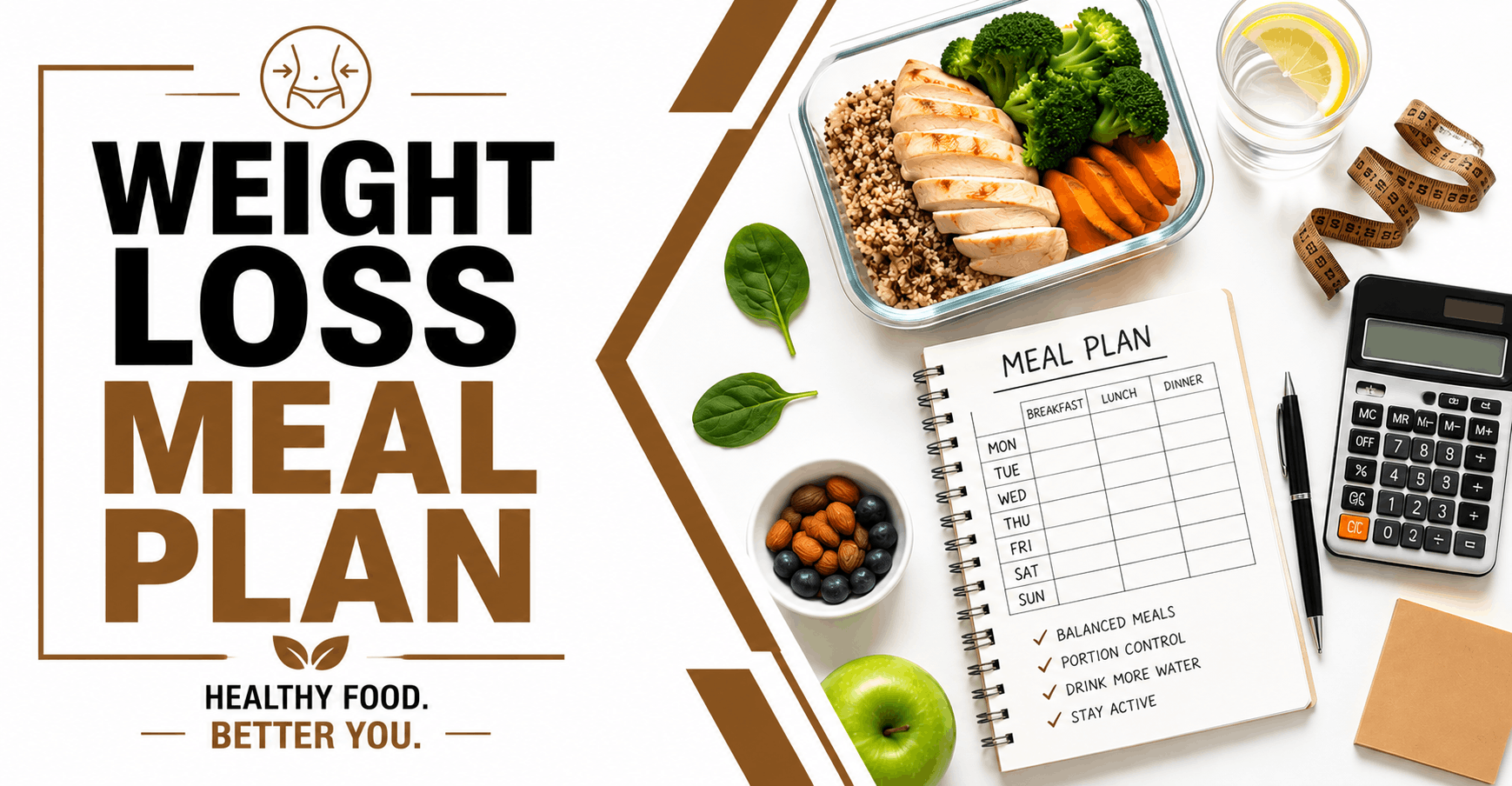
Most people don’t fail at losing weight because they lack willpower. They fail because the plan they picked was built for someone else’s life, not theirs. A practical meal plan for weight loss has to survive Tuesday nights when you’re tired, budgets that don’t stretch to fancy ingredients, and the fact that most of us eat out occasionally.
This guide walks through how to build one that fits, not one that looks good on paper for a week and then falls apart.
What a Weight Loss Meal Plan Actually Needs to Do
At the simplest level, losing weight means eating somewhat less energy than your body uses. That’s not controversial, and the National Institutes of Health lays out the basic science clearly. But knowing that fact doesn’t tell you what to eat on a Wednesday. That’s where most meal plans go wrong. They obsess over the math and skip the part where you have to actually enjoy eating this way for months.
A good plan does three things well: it keeps you reasonably full, it’s boring enough to repeat without much thought, and it leaves room for the foods you genuinely like. In my experience, the plans that stick are the ones that feel almost too simple, not the ones with elaborate weekly menus that require four different specialty ingredients.
Building Your Plate: The Structure That Matters More Than the Recipes
Rather than memorizing dozens of recipes, it helps to think in terms of a repeatable structure for each meal.
Protein first. Examples of protein sources include chicken, fish, eggs, tofu, beans, and Greek yogurt. Protein keeps you full longer than carbs or fat, calorie for calorie, and it protects muscle while you’re in a deficit. Most meals should have a clear protein source that isn’t an afterthought.
Vegetables to bulk things up. They add volume and fiber without much energy density, which means you can eat a genuinely large plate of food without derailing your goals. Frozen vegetables work just as well as fresh ones nutritionally, and they’re a lot more forgiving on a weeknight.
A moderate carb source. Rice, potatoes, oats, and whole-grain bread. These aren’t the enemy. What tends to surprise people is how much better they feel and how much less likely they are to binge later when they don’t cut carbs out entirely.
Some fat is fine, but not unlimited. Olive oil, nuts, avocado. A tablespoon here and there adds satisfaction and helps with nutrient absorption, but fat is calorie-dense, so it’s easy to eat too much without realizing it.
A Sample Day, Not a Rigid Script
Here’s roughly what a day might look like. Treat the above as a template to swap ingredients in and out of, not a rule to follow exactly.
Breakfast could be eggs with vegetables and a slice of whole-grain toast or Greek yogurt with fruit and a handful of oats. Lunch might be a big salad with grilled chicken or chickpeas, a grain like farro or rice, and a simple vinaigrette. Dinner typically includes a protein, a starchy side, and a vegetable, prepared in a way that you enjoy. A snack or two, like fruit with nut butter or a protein shake, fills the gaps between meals.
The point isn’t the specific foods. It’s that each meal has a protein anchor, some volume from vegetables, and a carb source that keeps energy steady. Once that pattern is set, you can rotate through dozens of combinations without ever feeling like you’re “on a diet.”
Meal Prep Without the Sunday Marathon
A lot of meal plans assume you’ll spend three hours every Sunday portioning containers. Some people love that. Plenty of others try it twice and quit.
A lighter version works fine: cook a couple of proteins in bulk, chop vegetables once, and keep a grain or starch ready in the fridge. Then assemble meals as you go rather than pre-packaging everything. This cuts prep time down significantly while still giving you the speed benefit of not cooking from scratch every single night.
If you’d rather skip cooking altogether some days, that’s fine too. Services and grocery delivery options have made healthy convenience food far more accessible than it used to be, and there’s no rule that says weight loss requires a home-cooked meal at every sitting.
Common Mistakes That Quietly Sabotage Progress
Cutting calories too aggressively. A very low intake might produce faster short-term results, but it usually backfires through fatigue, irritability, and eventually a binge that undoes a week of progress. Slower, steadier changes tend to hold up better over months.
Ignoring drinks. Sodas, juices, and specialty coffee drinks add up fast, and they don’t fill you up the way solid food does. This category is one of the easiest places to trim without feeling like you’re sacrificing anything.
Treating “healthy” as synonymous with “flavorless.” Herbs, spices, chili flakes, and a good sauce make a huge difference in whether a meal feels satisfying. Bland food is one of the fastest ways to quit a plan.
Skipping protein at breakfast. A carb-heavy breakfast tends to leave people hungry again within a couple of hours. Adding eggs, yogurt, or a protein shake in the morning tends to smooth out hunger for the rest of the day.
All-or-nothing thinking. One meal that doesn’t fit the plan isn’t a failure. It’s just a meal. The people who lose weight and keep it off are usually the ones who treat off-plan meals as neutral events, not moral failures that require punishing themselves afterward.
Weight Loss Meal Plan: Adjusting the Plan to Your Life
A meal plan that ignores your schedule, budget, or food preferences won’t survive contact with reality. Someone who travels for work needs a different approach than someone cooking at home every night. Someone on a tight budget will lean more on beans, eggs, frozen vegetables, and bulk grains, and there’s nothing inferior about that approach. It works.
Cultural food preferences matter too. There’s no requirement that weight loss meals look like a fitness magazine cover. Rice and lentils, tortillas and beans, and noodles and vegetables—all of these can fit the same protein-vegetable-carb structure described above.
If you have a medical condition, are pregnant, or have a history of disordered eating, it’s worth working with a registered dietitian or doctor rather than following a generic plan. The Academy of Nutrition and Dietetics has a directory for finding one, and personalized guidance tends to outperform generic advice in exactly the situations where generic advice is riskiest.
Weight Loss Meal Plan: Tools That Can Make This Easier
Tracking apps like MyFitnessPal can help build awareness of portion sizes early on, though most people don’t need to track forever. A few weeks of logging is often enough to internalize what a reasonable portion looks like. The CDC’s guidance on healthy weight is a solid, non-commercial reference point if you want to check advice against something official rather than another app’s marketing.
Meal delivery kits can help during busy stretches, though they’re rarely cost-effective as a permanent solution. They’re better used as a bridge during a hectic month than as the whole strategy.
FAQs
How many meals a day should a meal plan for weight loss include? There’s no magic number. Three meals with a snack or two works for most people, but some do better with two larger meals. What matters more is total intake across the day, not the number of times you eat.
Do I need to cut out entire food groups? No. Cutting out carbs or fat entirely tends to make the plan harder to sustain, not easier. For most people, moderation across food groups is usually more effective than elimination over the long term.
How fast should I expect to lose weight? A gradual pace, generally a modest amount per week, tends to hold up better than rapid loss. Faster loss often comes from water weight or muscle loss rather than fat, and it’s harder to maintain.
Is meal prepping required? Not strictly, though it removes a lot of daily decision-making, which is often where plans break down. Even partial prep, like having protein cooked ahead of time, helps.
Can I still eat out on a meal plan for weight loss? Yes. Choosing a protein-forward dish, asking for dressing on the side, and watching portion sizes lets you eat out regularly without derailing progress. Rigid all-or-nothing rules around restaurants usually don’t last.
The plans that actually work tend to be the boring ones: repeatable meals, a clear protein anchor, room for the foods you really like, and enough flexibility to survive a bad week without falling apart entirely. That’s a far better foundation than any single recipe list.