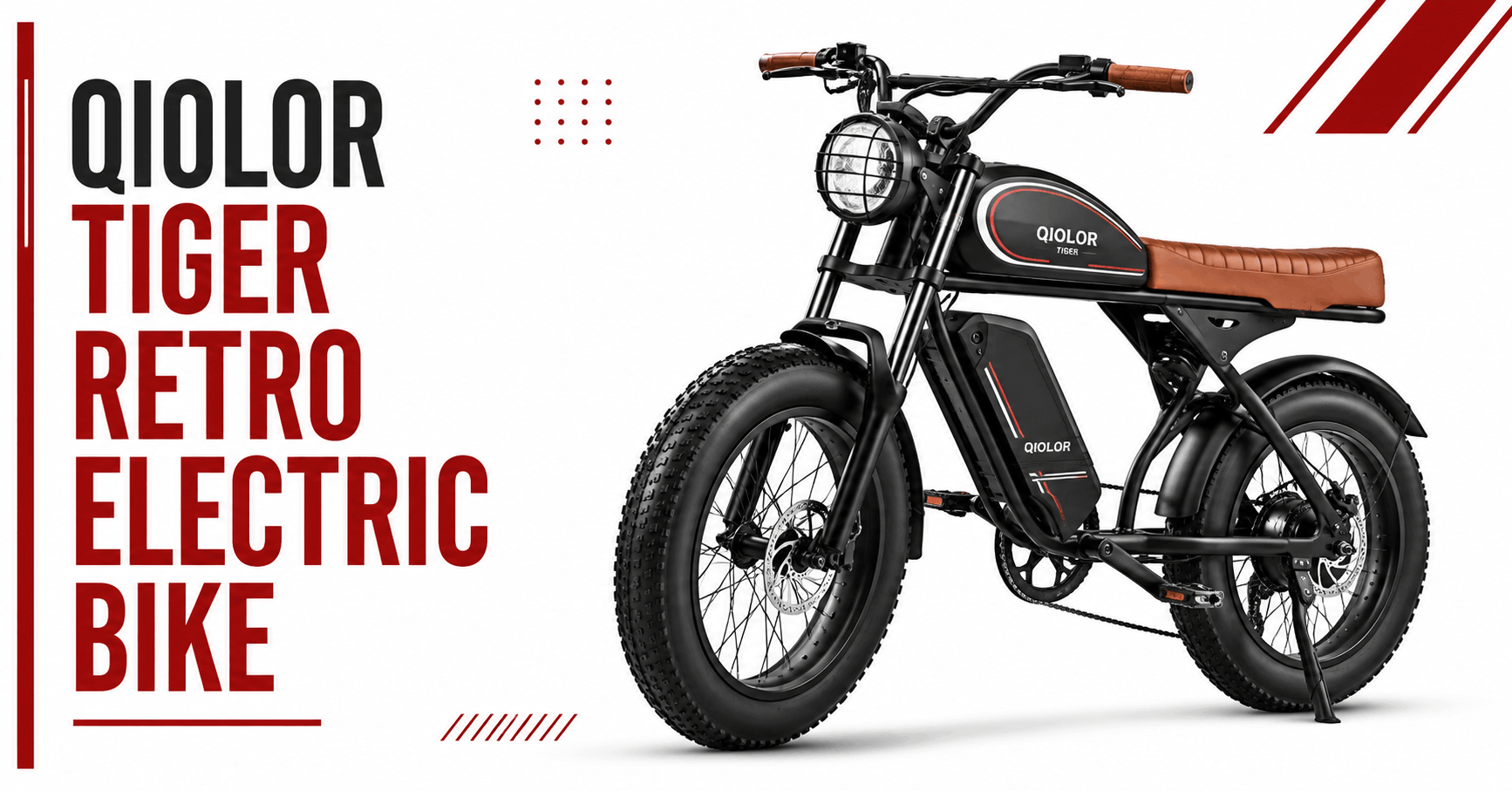
If you’ve been scrolling e-bike ads and keep landing on the same cafe-racer-shaped bike with fat tires and a round LED headlight, there’s a good chance it’s the Qiolor Tiger Retro electric bike. It’s built by Qiolor, a brand that’s leaned hard into the vintage moped look while keeping the price closer to a mid-range commuter e-bike than an actual motorcycle. That combination is exactly why it keeps popping up in comment sections and group chats.
This isn’t a press release rewrite. It’s a walkthrough of what the Tiger line actually offers, where it holds up, and where it doesn’t, based on the specs Qiolor publishes and how those numbers translate to actual riding.
What the Tiger Line Actually Is
Qiolor doesn’t sell just one bike called “Tiger.” There’s a small family: the Tiger JR (a lighter commuter version), the Tiger RL (a cruiser-leaning model), the Tiger RE (the cafe racer-styled flagship), and the Tiger Plus (a beefier off-road variant that’s typically sold on pre-order). Most people searching for the Qiolor Tiger Retro electric bike land on the Tiger RE, so that’s the one worth digging into first.
The TIGER RE is a Class 2 electric bike, meaning it comes with both pedal assist and a throttle, capped at 20 mph out of the box. Under the hood, so to speak, you get a 750W hub motor with a peak output of 1100W and 85Nm of torque. That’s enough to climb a 15-degree grade without much drama, and it’s the kind of number that separates this bike from cheaper “retro-style” e-bikes that look the part but stall out on the first real hill.
Design and Build Quality
The whole appeal of the Tiger is that it doesn’t look like a bicycle wearing a costume. The aluminum alloy frame, the round headlight, the padded seat, and the chunky 20″ x 4.0 fat tires all lean into a 1970s moped silhouette. In my experience, this is where a lot of retro-styled e-bikes fall apart. Companies nail the paint job and skip the structural work, and you end up with something that flexes under load or rattles after a few months.
Qiolor seems to have avoided that trap, at least on paper. The frame is rated for a 400 lb max load, and the bike itself weighs in around 87 to 98 lbs depending on the battery you choose. That weight is part of the tradeoff with this style of bike. It rides stable and planted, but it’s not something you’re casually carrying up a flight of stairs.
One detail worth flagging: the bike carries an IP5 water resistance rating, which Qiolor says makes it fine for creeks, mud, and snow but not for pressure washing or prolonged submersion. That’s a reasonable middle ground, and it matches what you’d expect from most e-bikes in this price bracket rather than being a standout feature.
Battery and Range
This is where the Tiger RE actually differentiates itself. Qiolor offers two battery options, a 48V 15Ah pack and a 48V 35Ah pack, both from LG cells. The smaller battery is rated for up to 60 miles, and the larger one claims up to 130 miles on a single charge. Charging time runs roughly 5 hours for the smaller pack and 10 to 12 hours for the larger one.
Those range numbers come from pedal-assist testing under the lightest assist setting, so don’t expect 130 miles if you’re riding on throttle only or blasting through Sport mode the whole time. Real-world range on e-bikes almost always lands below the marketed number once you factor in rider weight, hills, and how much you lean on the throttle. Still, even cutting that figure by a third leaves you with a genuinely long-range commuter bike, which is rare at this price point.
The battery is removable, so you can charge it indoors instead of dragging an extension cord out to a garage. That’s a small thing, but it matters if you live in an apartment or a building without easy garage access.
Riding Experience
Dual-piston hydraulic brakes come standard across the Tiger line, and given the bike’s weight and top speed, that’s not optional gear; it’s necessary. The suspension setup on the RE includes a hydraulic shock absorber in the rear, which softens the kind of potholes and cracked pavement that make heavier e-bikes feel punishing.
The riding modes are split into Eco, Normal, and Sport, giving you a reasonable spread between battery conservation and outright power. What tends to surprise people switching from a standard e-bike is how much the throttle changes the character of the ride. On pedal assist, the Tiger feels like a heavy but well-mannered cruiser. On throttle, it starts to feel closer to an actual moped, which is really the point of buying a bike shaped like one.
Seat height and geometry are built for riders between 5’1″ and 5’9″, according to Qiolor’s own sizing guide. If you’re outside that range, particularly taller riders, it’s worth checking the geometry chart closely before buying, since this isn’t a bike with a huge amount of adjustability built in.
Pricing and Availability
As of the most recent listing on Qiolor’s site, the Tiger RE is priced at $1,799, with the battery size and optional rack accessories adjusting the final total. The Tiger JR and Tiger RL sit lower in the lineup, generally starting under $1,600, while the Tiger Plus commands a premium closer to $2,199 given its added suspension and off-road focus.
Pricing on direct-to-consumer e-bike brands shifts fairly often, sometimes with seasonal promotions or bundle deals on accessories, so it’s worth checking the official Qiolor site for current numbers before you commit. Financing options through Affirm are also available at checkout, which is fairly standard across this segment of the e-bike market now.
Where It Makes Sense, and Where It Doesn’t
The Tiger RE is a strong pick if you want a commuter bike that doesn’t scream “commuter bike.” It’s also genuinely useful for riders who want long range without hauling around a second battery pack, since the 35Ah option covers a lot of ground on its own.
Where it makes less sense is for anyone who needs something light and foldable for elevator rides or public transit combos. At close to 90 to 100 lbs, this isn’t that bike. It’s also overkill if your commute is a flat two miles and you just want basic pedal assist. You’d be paying for range and power you’ll rarely use.
Compared to other retro-styled options in the broader electric bicycle market, the Tiger sits in a reasonable middle tier. Brands like Super73 lean more into lifestyle branding at a higher price, while cheaper retro-style bikes from lesser-known Amazon sellers often cut corners on motor quality and battery cells. Qiolor’s use of LG battery cells is a point in its favor here, since cell quality is usually the first thing manufacturers skimp on to hit a lower price.
Pros and Cons
The strengths are fairly clear: real torque for hills, genuinely long range on the bigger battery, hydraulic brakes as standard rather than an upgrade, and styling that actually looks intentional rather than slapped-on.
The tradeoffs are the weight, the limited rider height range, and the fact that this is a direct-to-consumer brand rather than an established name with a wide dealer network. If something goes wrong mechanically, you’re dealing with online support and shipping parts rather than walking into a local bike shop. That’s a real consideration, and outlets that cover the e-bike space, including sites like Electrek, have flagged this as a common friction point across the whole direct-to-consumer e-bike category, not just Qiolor specifically.
Frequently Asked Questions
Is the Qiolor Tiger street legal? As a Class 2 e-bike capped at 20 mph, it generally falls under the same rules as standard e-bikes in most U.S. states, though local laws vary enough that it’s worth checking your state’s specific e-bike classification before riding on public roads.
How long does assembly take? Qiolor states most riders can put the bike together in about 30 minutes using the included tools and their installation video, which is fairly quick for a bike this size.
Can you swap between the two battery sizes? Yes. The 15Ah and 35Ah batteries are physically interchangeable, so you’re choosing based on how much range and weight tradeoff you want rather than compatibility.
Is it worth it over a cheaper retro-style e-bike? If the alternative is an unbranded bike with a weak motor and low-grade battery cells, yes. The torque and range numbers alone justify the price gap for most riders who plan to actually put miles on it rather than park it for photos.