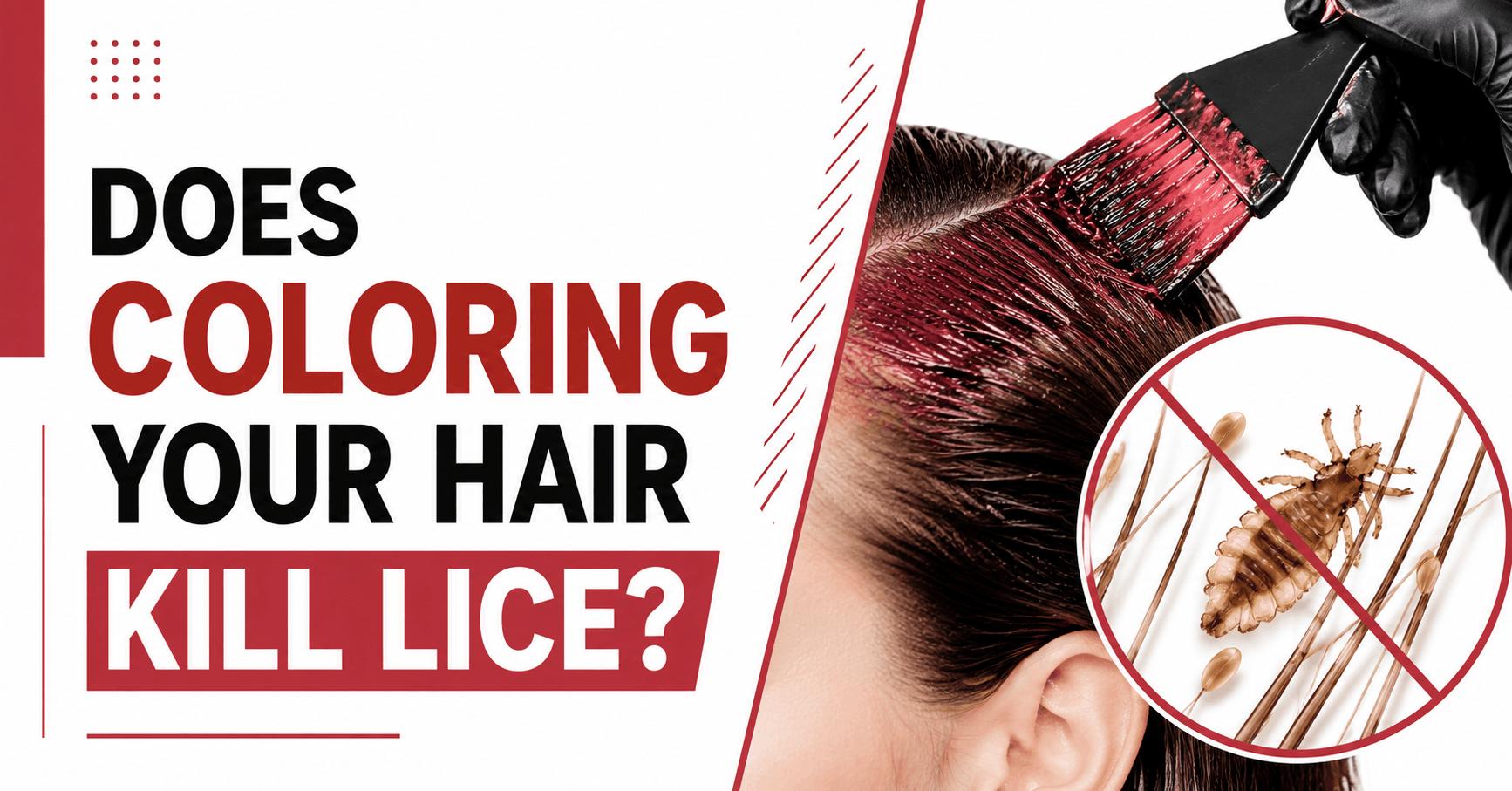
I If you’ve got lice crawling around and you’re staring at a box of hair dye wondering if it’ll solve the problem in one shot, you’re not alone. It’s one of those questions that pops up constantly in parenting forums and salon chairs, usually from someone desperate for a shortcut. So let’s get straight to it: does coloring your hair kill lice? Sort of, but not reliably enough to count on it, and definitely not enough to skip real treatment.
The Short Answer
Hair dye can kill some adult lice, mostly because of the ammonia and peroxide in permanent color formulas. Those chemicals are harsh enough to hurt or kill some bugs on contact. But dye is inconsistent at best. It doesn’t penetrate the nit casing well, which means the eggs glued to your hair shafts are largely untouched. You could dye your hair, feel like you nuked the infestation, and still have a new generation hatching within a week or two.
In my experience, this is exactly where people get tripped up. They see fewer live bugs right after dyeing and assume the job’s done, only to be scratching again ten days later once the eggs hatch.
Why Dye Kills Some Lice But Not All
Permanent hair dye works by opening the hair cuticle and depositing color inside the shaft. The ammonia in the formula is what does that opening, and it’s also somewhat toxic to insects that come into direct contact with it during the color’s processing time (usually 20 to 45 minutes, depending on the product).
Here’s the catch though. Lice aren’t just sitting in the open where the dye can smother them. They cling tightly to the scalp, especially close to the hairline and behind the ears, and a lot of them can retreat toward the scalp surface where dye doesn’t sit as thick or as long. Nits are even more protected. Each egg is coated in a glue-like substance that’s genuinely resistant to a lot of chemical exposure, dye included. That’s part of why lice have survived as a species that’s been bugging humans for thousands of years, according to the Wikipedia entry on head lice, which covers their biology and how stubbornly they’ve adapted to human hair over time.
Bleach is sometimes brought up as a stronger option since it’s more aggressive than standard dye. It can kill more adult lice than a basic color job would, mainly because of the higher concentration of peroxide involved. But bleach still doesn’t reliably kill nits, and it comes with its own downside: it can seriously damage your hair and irritate your scalp, especially if you’re already dealing with itching and inflammation from the lice bites themselves.
What Dermatologists and Health Agencies Actually Recommend
This is where I’ll be blunt: hair dye isn’t a recommended lice treatment anywhere in medical guidance. The CDC’s page on head lice lays out the accepted treatment options, and coloring your hair isn’t one of them. Same goes for the American Academy of Dermatology’s guidance on head lice treatment, which focuses on medicated treatments and thorough nit combing rather than cosmetic chemical processes.
What actually works, according to these sources, comes down to a short list: over-the-counter treatments containing permethrin or pyrethrin, prescription options like malathion or ivermectin lotion for resistant cases, and manual nit removal using a fine-toothed comb. None of that is glamorous, but it’s what’s backed by evidence.
One thing worth flagging here: lice have developed resistance to some over-the-counter treatments in certain regions, which is part of why doctors sometimes push toward prescription options if a standard treatment doesn’t clear things up after a couple of rounds.
If You Still Want to Dye Your Hair During a Lice Situation
Say you’ve already got a lice treatment plan going, and you also want to color your hair for unrelated reasons (maybe you’ve had a salon appointment booked for weeks). A few practical notes:
- Treat the lice first with an actual pediculicide, then wait until the infestation is confirmed gone before you dye. Dying while lice are still active risks the chemicals irritating already-inflamed skin.
- Don’t use hair dye as a substitute for combing out nits. Even if some adult lice die off from the chemical exposure, you’ll still need a nit comb to physically remove the eggs.
- Expect some discomfort. Ammonia and peroxide sting more than usual on a scalp that’s already irritated from lice bites and scratching.
- Check ingredient labels. Semi-permanent and demi-permanent dyes, which skip the ammonia, are gentler on your scalp but also weaker against lice, so don’t expect even the modest effect that permanent dye might have.
Common Misconceptions Worth Clearing Up
A lot of people assume that because dye “burns” or “kills germs,” it must wipe out lice completely. That’s an oversimplification. Dye chemicals aren’t formulated as insecticides, and their effect on lice is more of a side consequence than an intended function. Comparing it to something like EPA-regulated insect repellents, which are specifically tested and approved for killing or repelling pests, shows just how different the standards are. Hair dye has never gone through that kind of testing for lice efficacy.
Another misconception: that hotter processing or leaving the dye on longer will finish off any surviving lice or nits. Leaving dye on past the recommended time mostly just damages your hair and scalp. It won’t meaningfully improve lice control, and it increases your risk of chemical burns.
What About Hair Straightening Treatments or Perms?
Similar chemistry, similar story. Chemical relaxers and perm solutions can also kill some adult lice on contact thanks to their harsh pH and chemical composition, but they share the same blind spot: nits mostly survive. If someone tells you a keratin treatment or a perm “cured” their lice, what more likely happened is that the process knocked back the visible adult population enough that it looked resolved, right up until the nits hatched.
A Practical Game Plan If You’re Dealing With Lice Right Now
Skip the improvised chemical fixes and go with a layered approach instead:
- Use an EPA-registered, FDA-approved treatment (permethrin-based options are common and available without a prescription).
- Follow up with wet combing using a metal nit comb every two to three days for about two weeks. This step matters more than most people realize.
- Wash bedding, hats, and recently worn clothing in hot water, and vacuum furniture the person has been in contact with.
- Recheck the scalp around day nine or ten, since that’s roughly when any surviving eggs will hatch.
- If lice are still present after a full treatment cycle, talk to a doctor about resistant strains and prescription alternatives.
What tends to surprise people is how much of lice removal comes down to patience and repetition rather than one dramatic fix. There isn’t a single product, dye included, that clears an infestation in one pass.
FAQs
Does bleaching your hair kill lice better than regular dye? Bleach is somewhat more effective against adult lice because of its stronger chemical concentration, but it still doesn’t reliably kill nits, and it’s harder on your scalp and hair.
Will box dye from the drugstore work as well as salon dye for killing lice? Both work about the same in terms of any lice-killing effect, since it comes down to ammonia and peroxide content rather than where you bought it. Neither is a substitute for an actual lice treatment.
Can lice survive being dyed over multiple times? Yes. Nits especially can survive repeated dye applications since the protective coating around the egg resists a lot of chemical exposure.
Is it safe to dye your hair while you have an active lice infestation? It’s generally better to treat the lice first with a proper pediculicide, since dyeing an irritated, itchy scalp can cause extra discomfort and inflammation.
Do natural or organic hair dyes have any effect on lice? Not much. These formulas typically skip the ammonia and peroxide that give conventional dye whatever mild lice-killing effect it has, so expect little to no impact on an infestation.
Read Also: Bioma Reviews: Does This Gut Health Supplement Actually Work?