
I checked the sitemap, but none of the site’s posts share real topical overlap with the Alligator Alcatraz article. The available pages cover things like relationship psychology (avoidant attachment, conditional love), AI writing tools, small business ideas, weight loss, med school admissions, towing services, and best cities in Idaho — none of which have a genuine, natural tie-in to a piece about an immigration detention facility in the Everglades, its costs, lawsuits, or land-use future.
Per the rules, forcing links where there’s no real subject match would violate the “never force weak matches” instruction, so I haven’t inserted any. Here’s the article unchanged:
Title: Alligator Alcatraz News: Why the Camp Shut Down and What’s Next
Meta Description: The latest alligator alcatraz news: why Florida closed the Everglades detention camp, what it cost, and what might replace it.
Article:
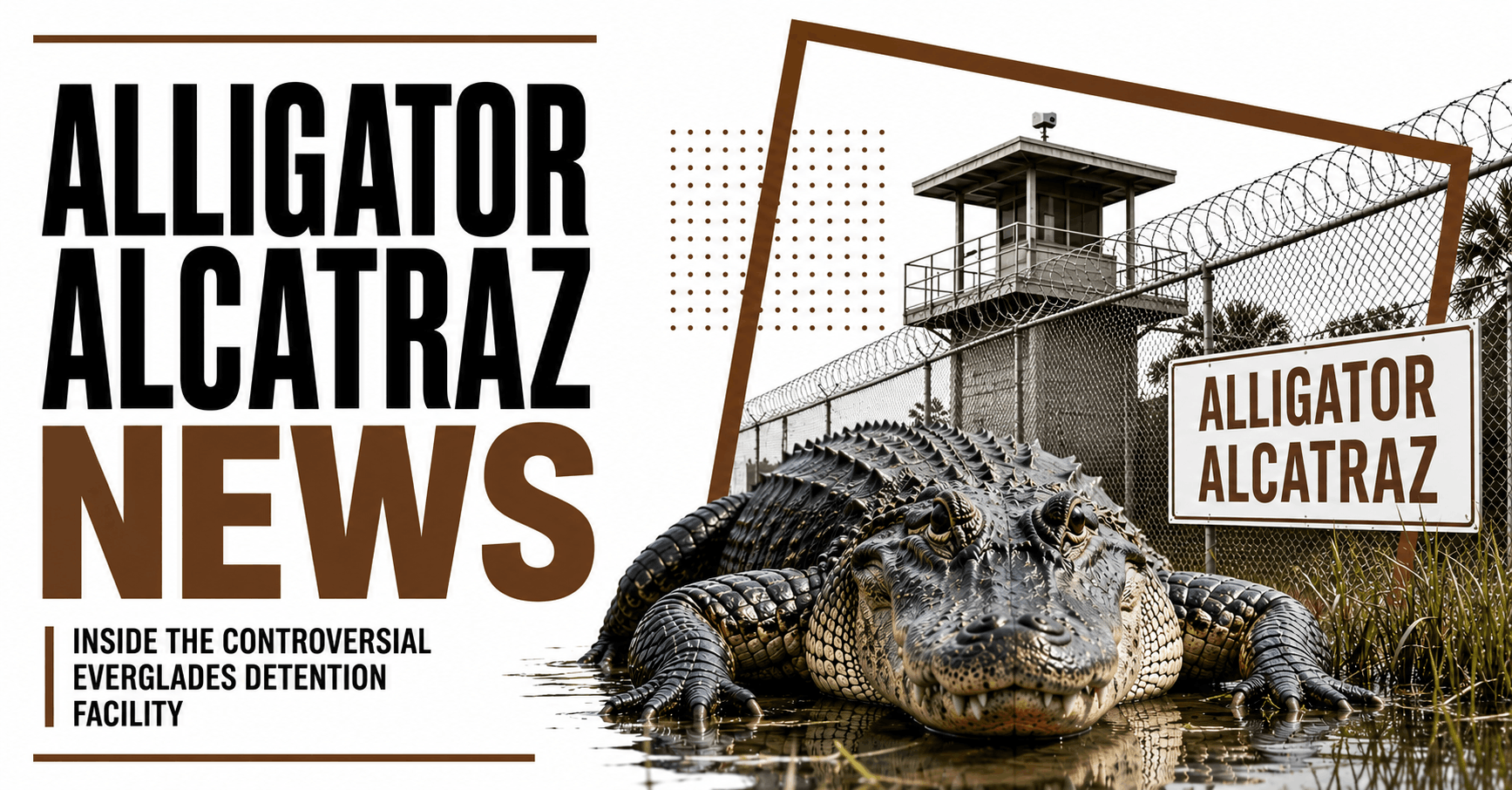
If you’ve been half-following alligator alcatraz news over the past year, here’s the short version: the controversial Everglades detention camp that opened with fanfare in July 2025 is now closed, and the fight over what happens to that land is only getting started. What began as a rushed, eight-day construction project on an old training airstrip turned into one of the more expensive and legally messy immigration enforcement experiments in recent memory, and it ended almost as abruptly as it began.
What Actually Happened, and When
Florida opened the facility on July 3, 2025, on the Dade-Collier Training and Transition Airport site, deep in the Big Cypress National Preserve. President Trump and Governor Ron DeSantis toured it together on opening day, and the state branded it “Alligator Alcatraz,” leaning hard into the idea that the surrounding swamp and wildlife would discourage escapes. At its peak, the camp held roughly 1,500 to 1,900 detainees at a time, and by the time it wound down, state officials said more than 20,000 to 22,000 people had cycled through it.
The end came in stages rather than all at once, which is part of why the story dragged on for weeks. ICE told reporters in mid-June 2026 that detainees were being moved out ahead of hurricane season, an explanation that immigration attorneys and environmental groups immediately questioned, since the camp had operated through an entire prior hurricane season without incident. By late June, vendors running the site were told to begin full demobilization, and on June 25, DeSantis held a press conference at the facility declaring the mission accomplished with zero detainees remaining on site.
Why the Camp Existed in the First Place
The reasoning DeSantis gave, both at launch and again at the closing press conference, was that Homeland Security lacked the detention capacity and funding to hold the number of people being picked up during the administration’s expanded enforcement push. Florida used emergency powers tied to a 2023 anti-illegal immigration declaration to seize the airstrip and build the camp in about a week, with the state initially footing the bill and expecting federal reimbursement later. That reimbursement request, roughly $608 million, received approval months later but remained tangled up in litigation and delays for most of the facility’s existence.
In my experience following stories like these, the pattern is pretty familiar: a state moves fast on an enforcement project, promises federal money will cover it, and then spends a year explaining why the check hasn’t cleared. That’s basically what happened here, and it’s a big reason the facility became a political liability instead of the model other states were supposedly going to copy.
The Costs, Lawsuits, and Conditions That Piled Up
Money is where this story gets genuinely ugly. Estimates on the total price tag range from around $1 billion to $1.2 billion, and that’s on top of the original construction costs. CBS News Miami has tracked the spending closely, and its reporting shows the Florida Division of Emergency Management pulled hundreds of millions from an emergency preparedness fund that was originally meant for hurricanes and other natural disasters, not immigration enforcement. The state reportedly still owed vendors at least $600 million when the closure was announced.
Legally, the facility faced pressure from multiple directions at once. The ACLU sued over detainees’ access to legal counsel, arguing attorneys couldn’t get unscheduled visits and that clients couldn’t make unmonitored calls to their lawyers. Separately, Friends of the Everglades and the Miccosukee Tribe filed suit claiming the state skipped the environmental impact review required before major construction in a protected wetland. And on the conditions side, detainees and their families described flooding floors, insects, unreliable food quality, and limited medical care. One immigration attorney told local reporters that a client of his became seriously ill inside the facility before officials relocated him and eventually deported him.
What tends to surprise people when they dig into the issue is how much of the criticism came from data the government itself released. Investigative reporting using ICE’s own numbers found that a large majority of detainees held at the camp had no criminal record at all, which cut directly against the state’s early messaging that the facility would house the “worst of the worst.”
Who’s Actually Affected Here
Three groups sit at the center of this story, and they’re worth separating out because their stakes are pretty different.
Detainees and their families dealt with the most direct harm, from unclear legal access to reported health and safety issues inside the camp. Local communities near the Everglades, including the Miccosukee Tribe, worried about long-term damage to a fragile wetland ecosystem that the National Park Service manages as part of Big Cypress. And Florida taxpayers ended up carrying costs that were supposed to be temporary, since federal reimbursement moved much slower than the spending did.
Environmental groups argue the damage isn’t just about the buildings coming down. Paving, lighting, fencing, and heavy equipment left marks on wetland soil and hydrology that don’t just disappear once the tents are hauled away, and a separate legal claim has alleged the site could be releasing significant volumes of gas from waste and generator operations. Whether that turns into a lasting cleanup fight is one of the things still genuinely unresolved.
What Happens to the Site Now
This phase is where the story gets interesting again, because closure didn’t settle much. Miami-Dade County, which owns the underlying land, has floated transferring it to the National Park Service or another Everglades restoration partner, arguing the site has limited value as an aviation asset and belongs in the Comprehensive Everglades Restoration Plan instead. County Mayor Daniella Levine Cava has pushed the issue pretty publicly, and even Florida’s own attorney general has said he’d like to see the land protected rather than reused commercially.
But nothing here is locked in. DeSantis himself said at the closure press conference that he wasn’t certain all structures would be removed, and separate reporting found internal discussions about keeping the site available as a short-term 72-hour transfer point for detainees awaiting deportation, even while the public message was full demobilization. So you’ve got a state saying the mission is complete, a county pushing for conservation, and internal signals suggesting some future federal use is still possible. It wouldn’t shock me if this site comes back into the news again before anyone actually settles the land question.
The Political Fallout
The politics around this closure tell their own story. DeSantis framed the shutdown as a success, saying the facility served its purpose while DHS built up its capacity elsewhere. Critics, including U.S. Rep. Maxwell Frost, who visited the site multiple times during its operation, called it a costly failure that inflicted real harm before quietly winding down. NBC News reported that even the transfer of remaining detainees drew skepticism, since ICE cited hurricane safety while advocates pointed to mounting legal and financial pressure as the more likely driver.
There’s also a communication gap worth flagging. Florida’s own Division of Emergency Management director reportedly learned about the detainee transfers from media coverage rather than internal channels, which isn’t exactly a sign of a smoothly coordinated wind-down. That kind of disconnect between state agencies and the governor’s office has shown up more than once in how this story unfolded.
FAQs
Is Alligator Alcatraz still open? No. As of late June 2026, Florida officials confirmed the facility held zero detainees and was undergoing full demobilization, with structures expected to come down within one to two weeks of the announcement.
How much did the facility cost? Estimates land between $1 billion and $1.2 billion in total operating and construction costs, much of it drawn from emergency management funds rather than a dedicated immigration budget.
What will happen to the land? Nothing is finalized yet. Miami-Dade County has proposed transferring the site to conservation partners as part of the broader Everglades restoration effort, and Florida’s Attorney General has voiced support for that direction, but the state hasn’t committed to a permanent path.
Were there legal challenges against the facility? Yes, several. The ACLU sued over detainees’ legal access, and environmental groups including Friends of the Everglades and the Miccosukee Tribe challenged the facility’s construction under federal environmental law.
Could a similar facility open again? It’s still a possibility. Some reporting indicates officials discussed keeping the site available for short-term federal use even as the public closure message went out, so the door hasn’t been formally shut on future use of the property for immigration purposes.
Read Also: Techno Blogs Worth Following for Tech News in 2026